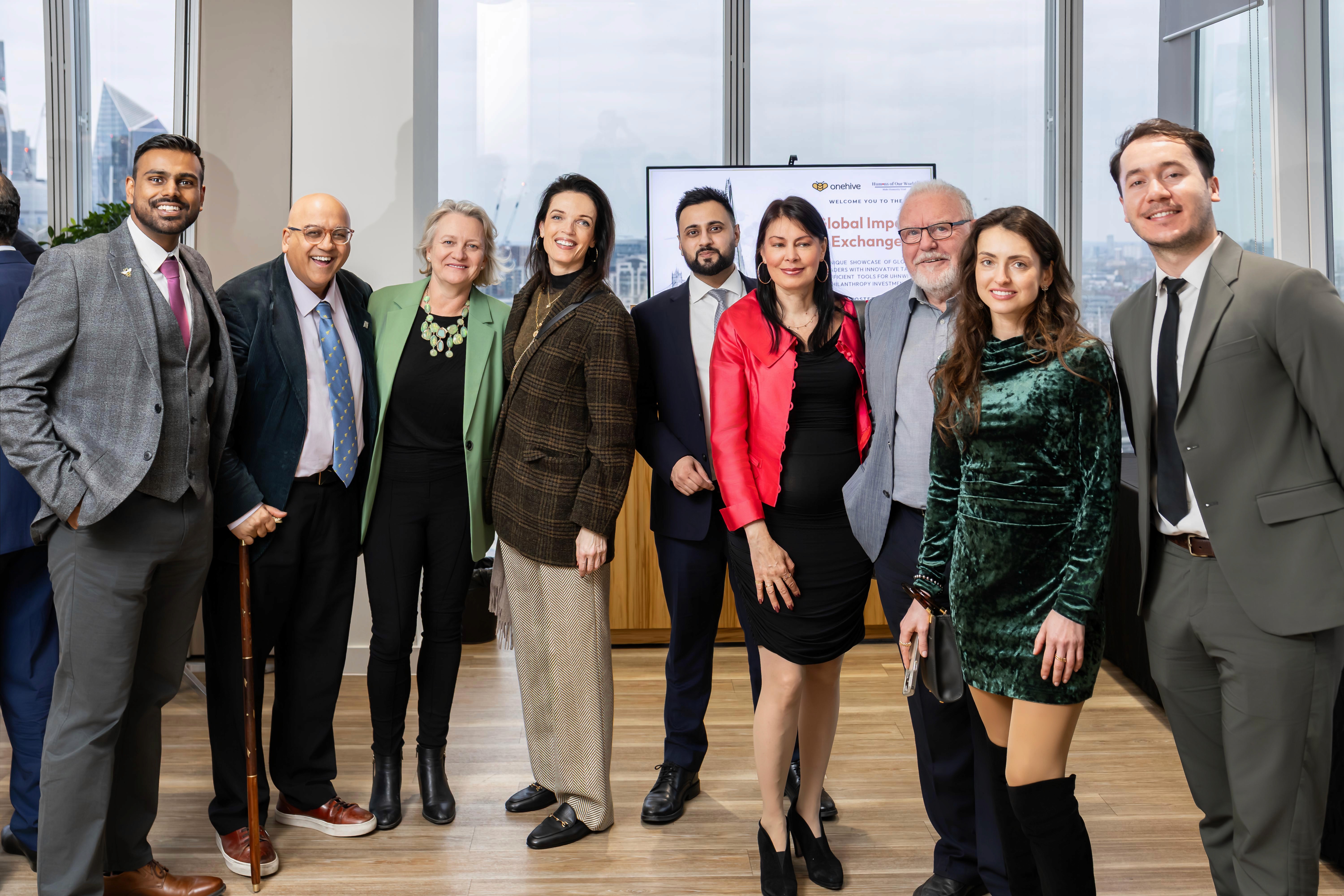
On 1st April, OneHive hosted the Global Impact Exchange at The Shard in partnership with Humans of Our World Foundation, bringing together a carefully selected group of philanthropists, private capital, and impact leaders for an evening centred on one clear objective, to bridge the gap between those funding change and those delivering it.
Rather than relying on a traditional format of long presentations and surface-level networking, the evening was intentionally designed to be direct and outcome-focused. The aim was to remove friction, both in conversation and in structure, allowing capital and impact to meet without the usual barriers that often slow meaningful collaboration. In practice, this created something far more valuable than a standard event, a room where conversations moved quickly from intent to execution.
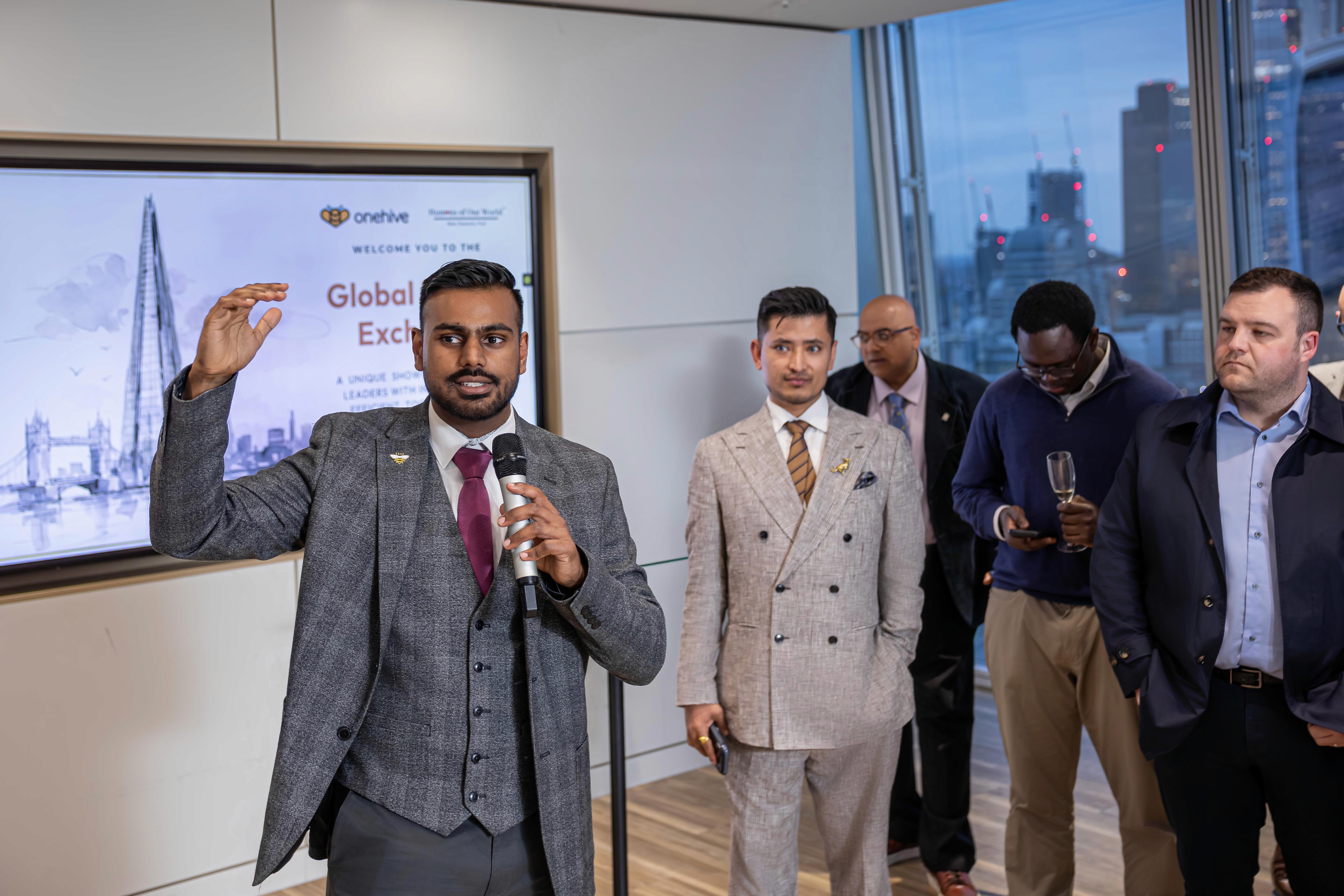
Rethinking How Impact Is Funded and Delivered
Across the sector, there is a growing recognition that the current model is not operating as effectively as it should. Organisations delivering critical work are often constrained not by lack of ambition, but by fragmented systems, restricted funding structures, and administrative burdens that dilute both time and resources. As highlighted during the evening, a significant proportion of effort within charities is absorbed by reporting and compliance, rather than delivery itself .
This creates a structural imbalance. Funders seek accountability and measurable outcomes, yet the very processes designed to provide that assurance often slow down the work they are intended to support. The result is a disconnect between capital and impact, one that requires not just more funding, but better alignment.
The Global Impact Exchange was built around addressing exactly this tension, not through theory, but through direct engagement between those on both sides of the equation.
A Deliberately Simple Format
The structure of the evening reflected this intention. A small number of organisations were invited to present their work through concise, focused missions, each grounded in real-world delivery and measurable outcomes. This was not about volume, but about clarity.
By limiting the number of presentations and removing unnecessary complexity, the event created space for meaningful dialogue. Conversations that followed were not transactional, but exploratory, with attendees engaging directly with founders and operators to understand not only what they were building, but how support could be deployed in a way that genuinely accelerated their work.
The Organisations Driving the Conversation
At the centre of the evening were four distinct missions, each approaching impact from a different angle, yet collectively illustrating the breadth and depth of what is possible when capital is aligned with purpose.
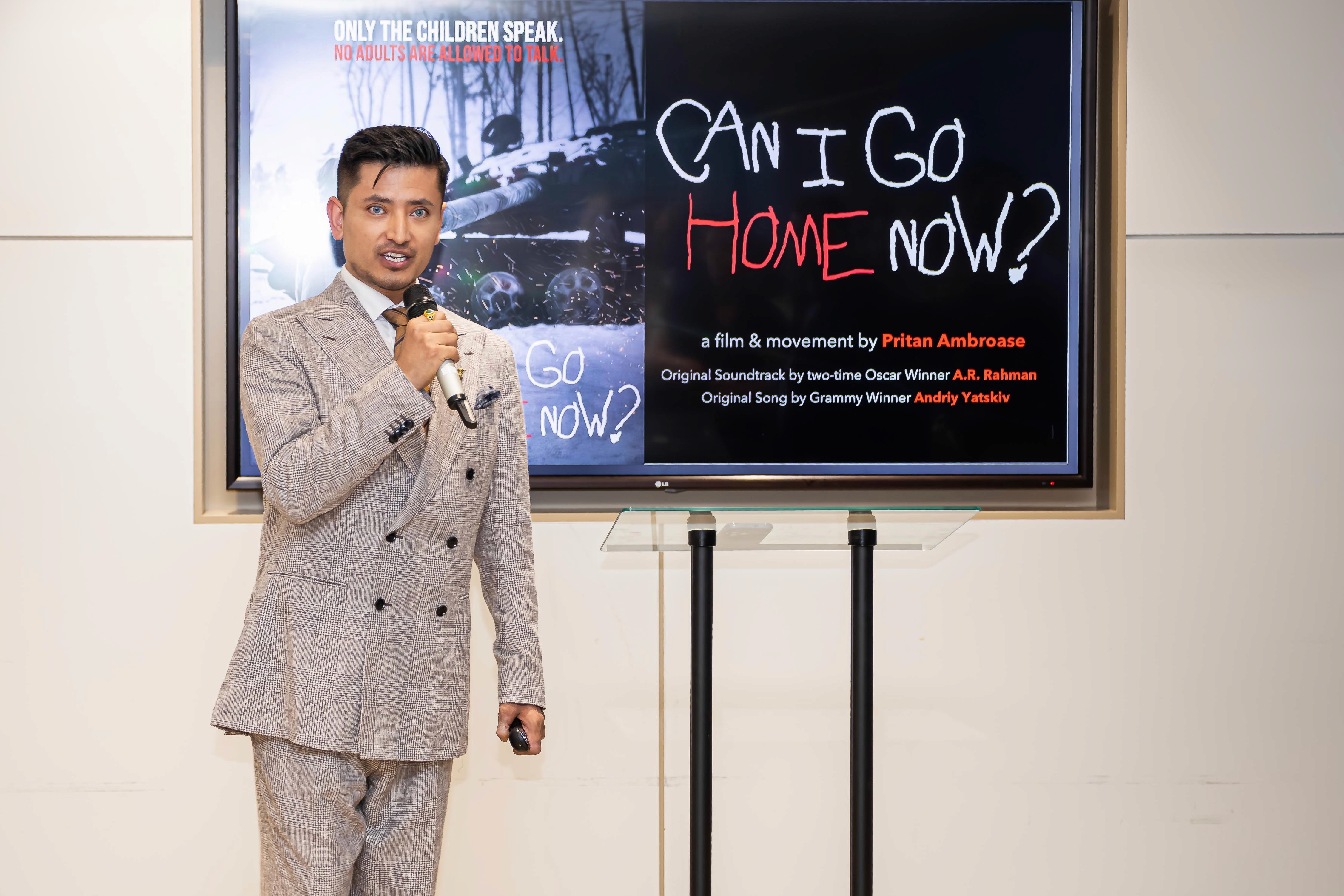
Humans of Our World presented a project that sits far beyond traditional storytelling. Led by filmmaker Pritan Ambroase, the initiative centres on a documentary filmed in active war zones, where only children speak, deliberately removing politics and adult narratives from the conversation. Titled Can I Go Home Now?, the film does not try to explain conflict or assign blame. Instead, it holds on a question that is at once simple and devastating, allowing it to land without distraction.
What gives the project its weight is not only where it was filmed, but how it chooses to speak. In a world crowded with opinions, it creates space for something more honest, children speaking for themselves, without interpretation or framing. As shared during the presentation, the work is not positioned against any country or ideology, but for every child, everywhere, grounded in the belief that storytelling, when handled with integrity, can cut through division and remind us of our shared humanity
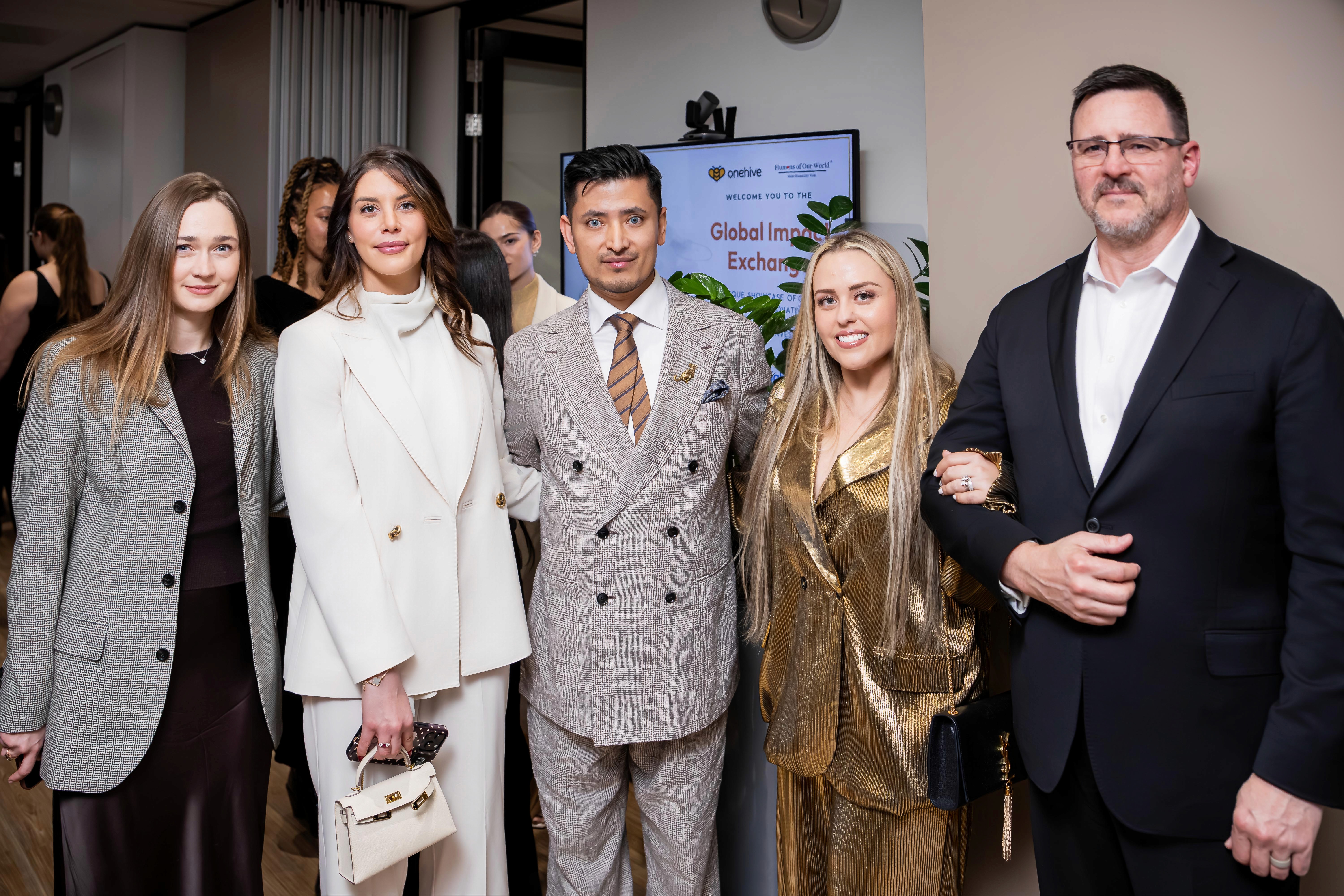
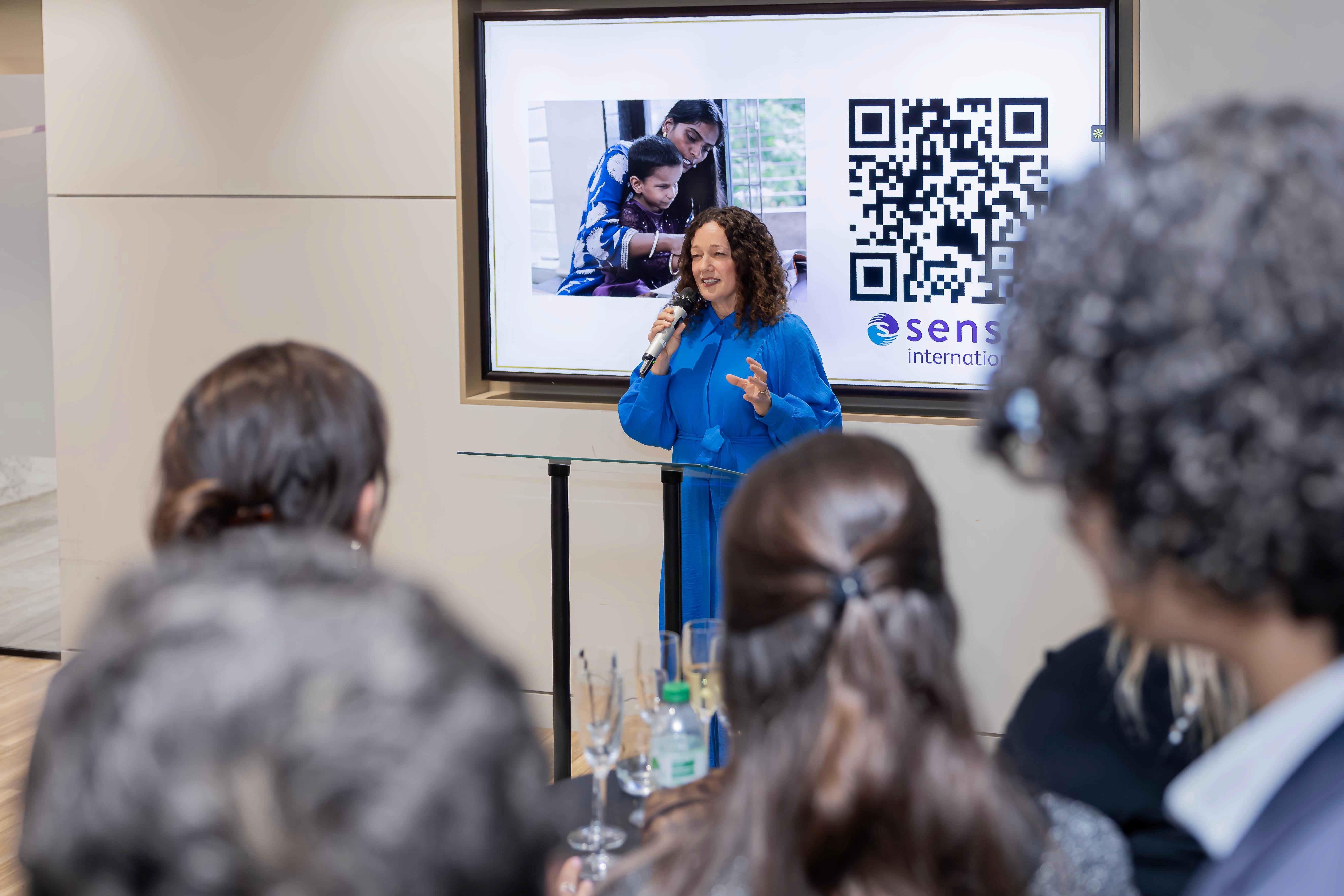
Sense International brought a different but equally vital perspective, led by Wendy Hawk, focusing on children and adults who are deafblind or have complex disabilities. Their work operates at the intersection of care, education, and inclusion, ensuring that individuals who are often overlooked are given the opportunity not only to receive support, but to participate fully in society.
What distinguishes their approach is its long-term focus, supporting individuals from early intervention through to independence, while working closely with families and communities to create sustainable change. In a sector where visibility often determines access, their mission remains centred on ensuring that no one is excluded simply because their needs are more complex.
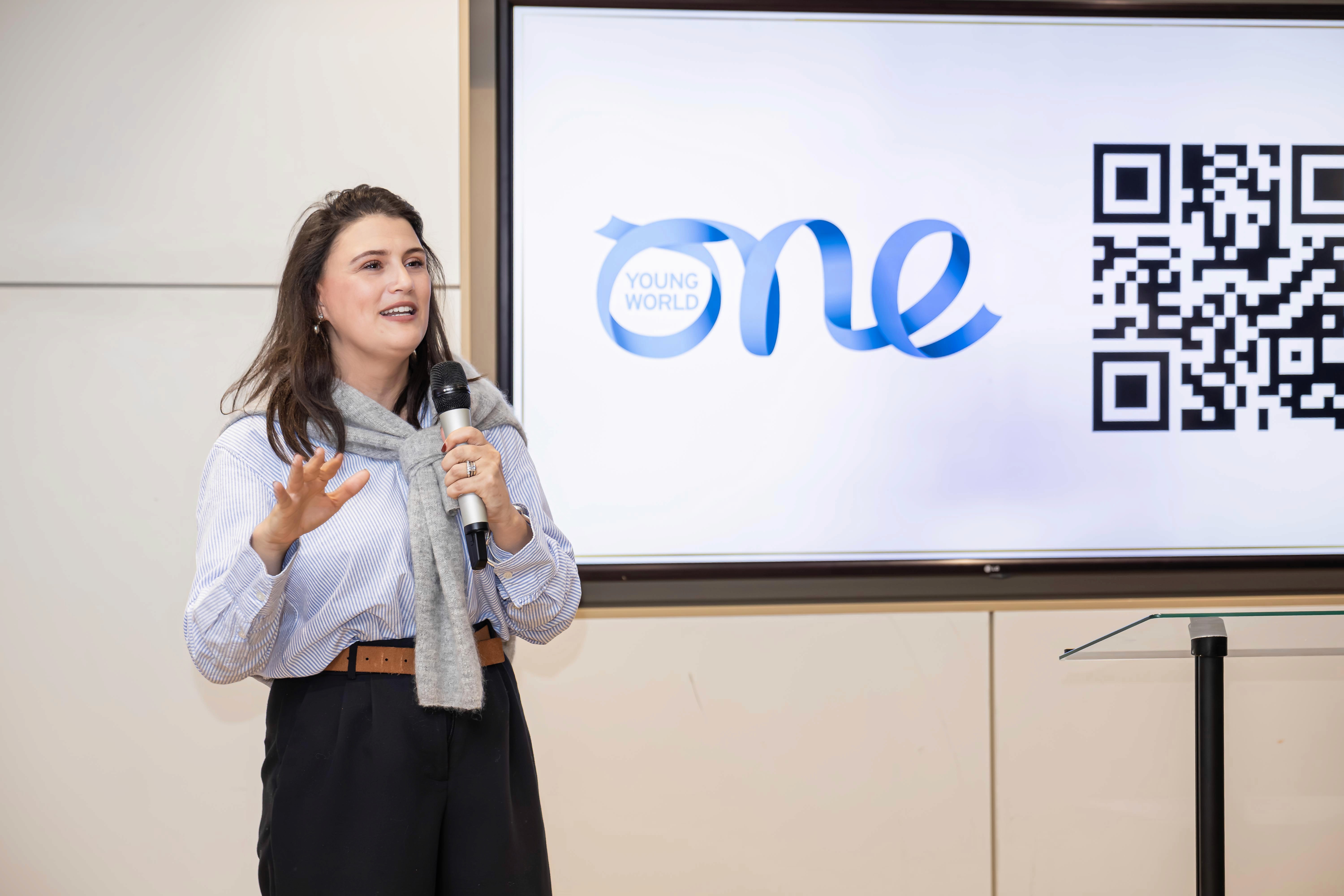
One Young World represented by Managing Director Ella Robertson, highlighted the role of leadership in shaping future impact. By identifying and supporting young leaders who are already driving change within their communities, the organisation provides them with the platform, network, and credibility required to scale their work.
A case study shared during the evening illustrated this progression clearly, from grassroots community action to global recognition and significant funding, demonstrating how early support can transform both individual trajectories and broader outcomes. As emphasised in the talk, the principle is straightforward, that when young people who are actively trying to create change are given the right backing, the long-term impact can be substantial.
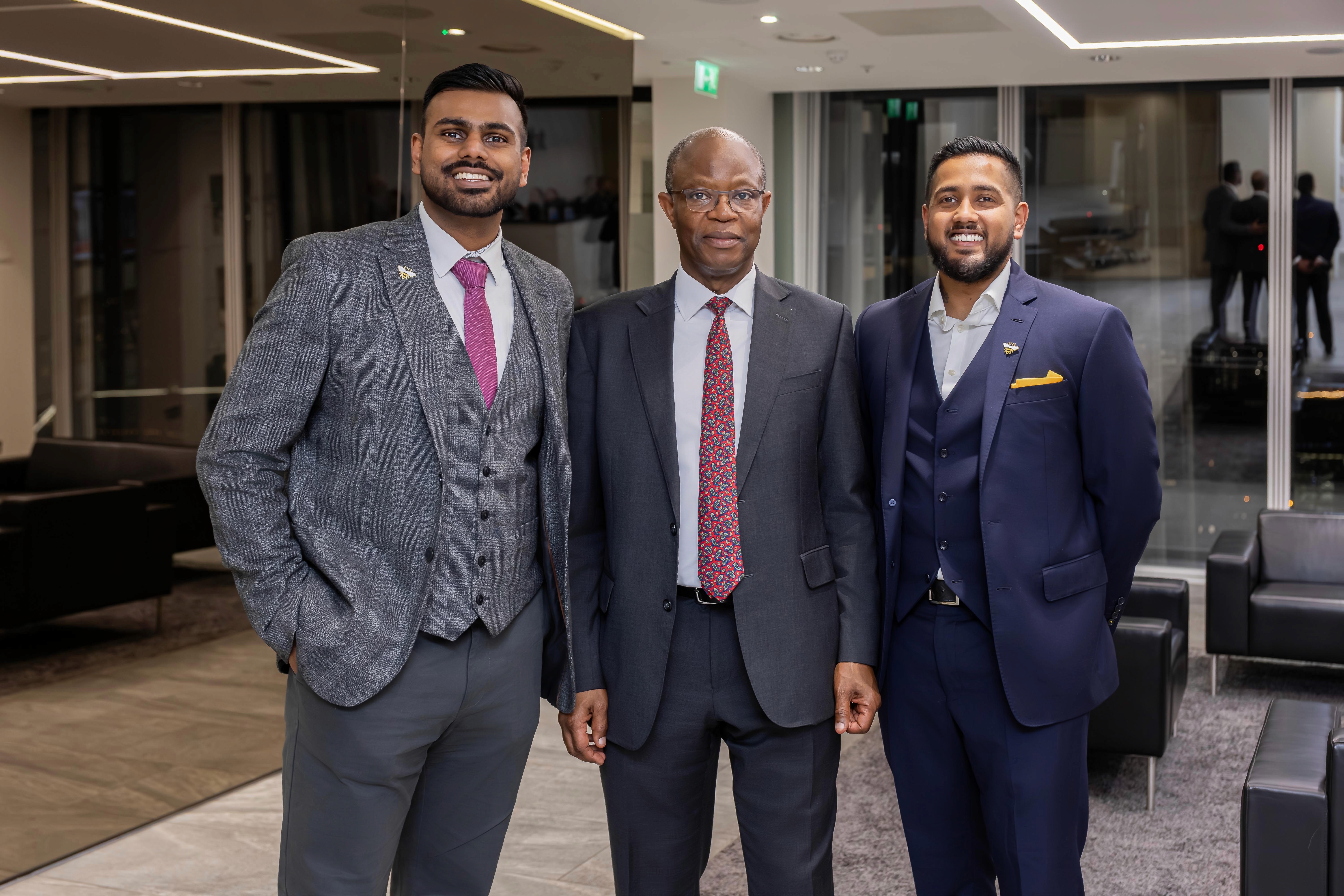
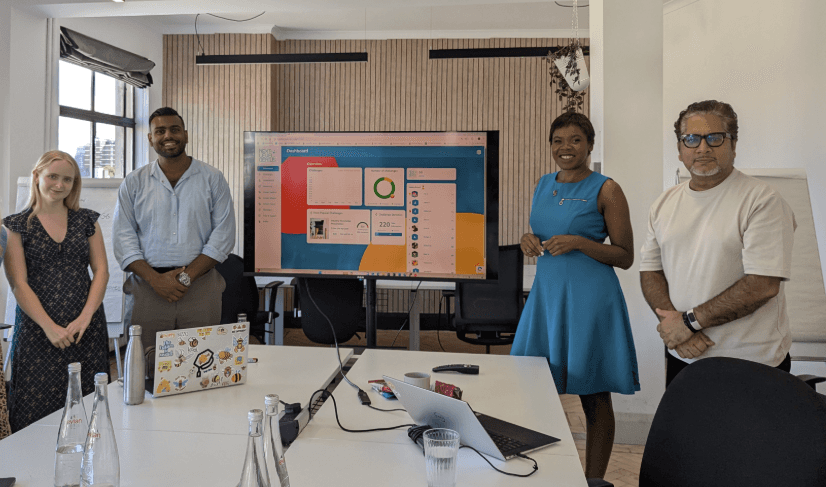
Finally, OneHive led by Rushab Shah addressed the structural challenges underpinning the entire ecosystem. Rather than focusing on a single cause, the platform is designed to strengthen how impact is delivered and measured across organisations.
By reducing administrative burden and enabling real-time reporting, OneHive allows charities to focus more of their time and resources on delivery, while simultaneously providing funders with greater transparency and confidence. As discussed during the evening, this shift is critical in a sector where inefficiencies can significantly limit scale, and where better infrastructure can unlock disproportionate gains in reach and effectiveness
Looking Ahead
The Global Impact Exchange was never intended to be a standalone moment. Instead, it represents the beginning of a more connected approach to impact, one where capital, technology, and delivery are aligned from the outset.
Each of the organisations featured continues to seek support, whether through funding, partnerships, or collaboration, and the conversations initiated during the evening are expected to develop further in the weeks and months ahead.
What remains clear is that meaningful impact does not emerge from isolated efforts. It is built through coordinated systems, shared understanding, and the willingness to engage directly with both the challenges and the opportunities within the sector.
This event marked a step in that direction, with the potential for much more to follow.
About the Author
Rosie Njoroge
Executive Assistant
Bee Curious - More to Explore
OneHive is a tech for good platform that has been co-designed with charities to help you scale up your impact, not your overheads.
onehive.ai